Primary Care vs Urgent Care: When to Go Where in Florida
Key Takeaway:
🟢 Primary care supports long-term health through prevention and continuity.
🟢 Urgent care is best for short-term, non-emergency issues when quick help is needed.
🟢 Florida’s climate and lifestyle make regular primary care especially important.
🟢 Choosing the right setting improves outcomes and reduces unnecessary visits.
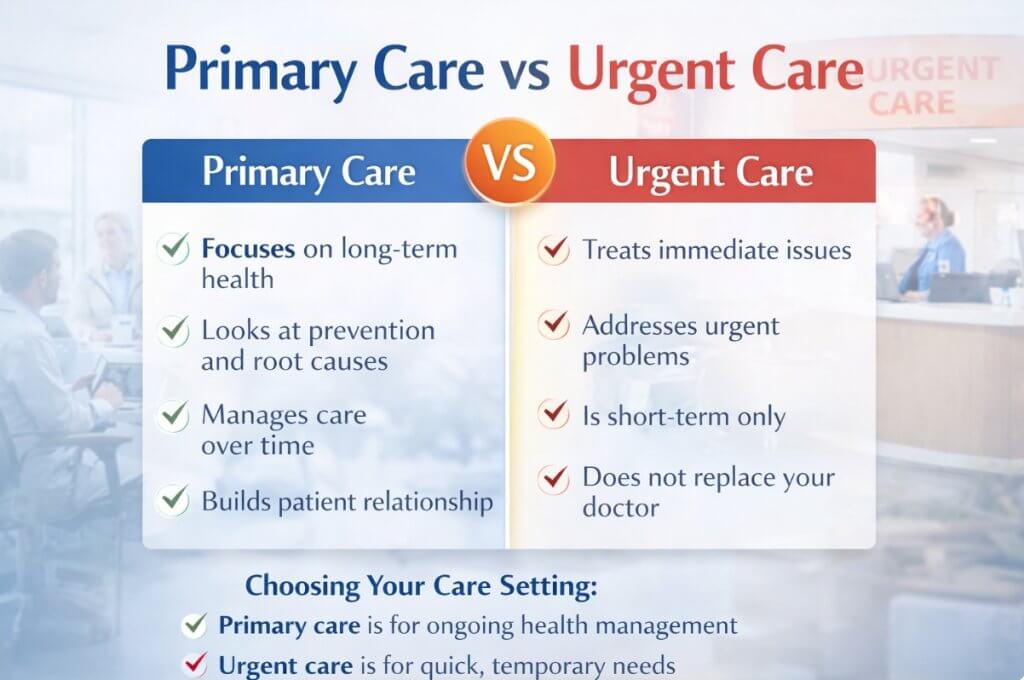
Primary Care vs Urgent Care
Florida patients often ask the same question—especially during heat waves, flu season, or busy travel months:
Should I see my primary care provider, or go to urgent care?
Knowing the difference helps you get faster, safer care, avoid unnecessary costs, and protect your long-term health. This guide is written specifically for Florida residents, where climate, lifestyle, and access patterns matter.
What Primary Care Means for Florida Patients
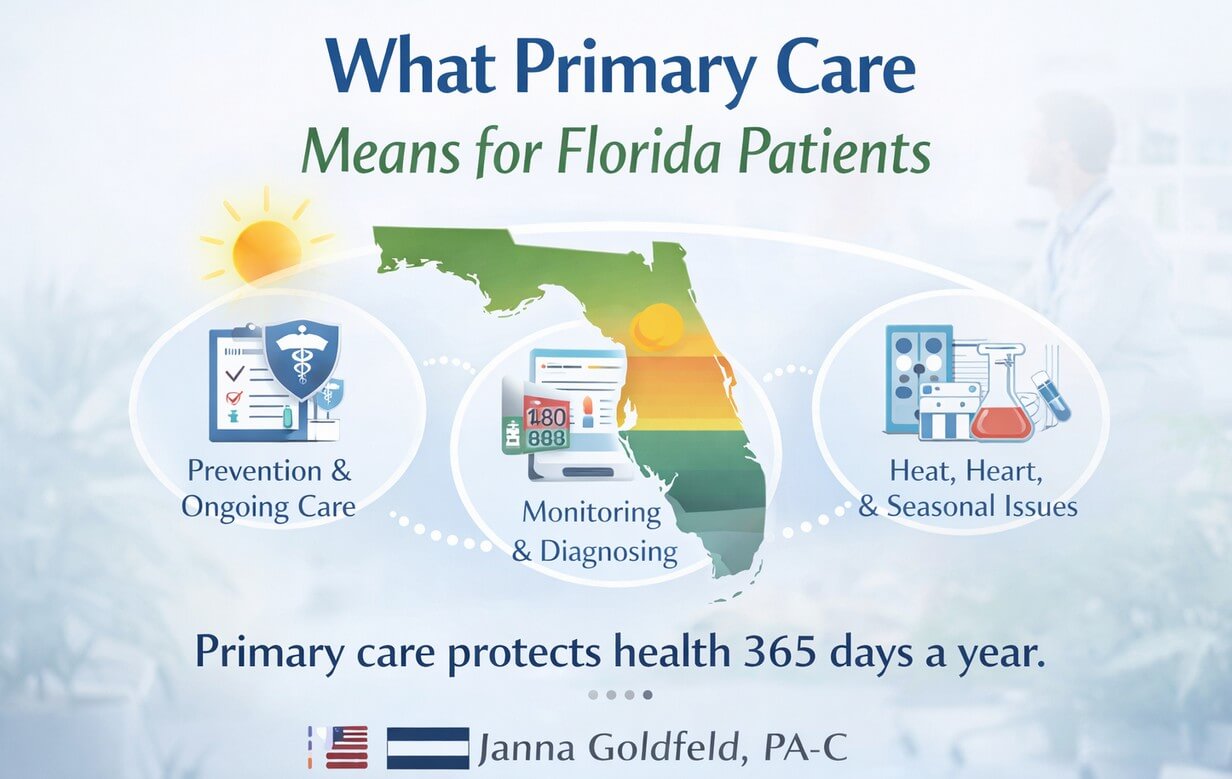
Primary care is your medical home. It focuses on prevention, diagnosis, and ongoing management over time—especially important in Florida, where heat, dehydration, cardiovascular strain, and seasonal illnesses are common.
Primary care is the right choice for:
- Annual physicals and preventive visits
- Blood pressure, cholesterol, and metabolic monitoring
- Fatigue, dizziness, or heat-related symptoms
- Ongoing conditions that need follow-up
- Lab reviews, medication management, and referrals
Primary care providers know your history and trends—critical for personalized, proactive care.
When Urgent Care Makes Sense in Florida
Urgent care is best for short-term, non-emergency issues that need prompt attention when your primary provider isn’t available.
Urgent care is appropriate for:
- Minor injuries (sprains, small cuts, mild burns)
- Cold, flu, sinus infections, sore throat
- Mild dehydration symptoms without red flags
- Minor infections or rashes
- Sudden issues after hours or on weekends
Urgent care treats the immediate problem, but it typically doesn’t manage long-term follow-up.
The Key Difference: Continuity vs Convenience
The real difference isn’t speed—it’s continuity.
Primary care
- Manages health over time
- Focuses on prevention and root causes
- Coordinates care across providers
Urgent care
- Addresses immediate needs
- Is episodic and short-term
- Doesn’t replace a long-term provider
For Florida patients who travel, split time between states, or experience seasonal health changes, continuity is essential.
When Urgent Care Is NOT the Right Choice
Go to emergency care—not urgent care—for:
- Chest pain or shortness of breath
- Signs of stroke
- Severe abdominal pain
- Major trauma or uncontrolled bleeding
Time matters in these situations.
Why Primary Care Still Matters in Florida
Relying only on urgent care can lead to missed patterns, delayed diagnoses, and fragmented treatment. Primary care connects the dots—helping prevent small issues from becoming serious problems, especially in Florida’s demanding climate.
Clinics like Florida Wellness And Medical Care emphasize prevention and continuity so patients stay healthier year-round.

Final Thought for Florida Patients
Urgent care has its place—but it should never replace a trusted primary care provider. If it’s ongoing, preventive, or personal, primary care is the right place to start.
About the Author:
Janna Goldfeld, PA-C is a licensed Physician Assistant providing patient-centered primary care in Florida. She focuses on preventive medicine, early detection, and helping patients choose the right level of care at the right time.
Disclaimer:
This article is for educational and informational purposes only and does not constitute medical advice, diagnosis, or treatment. Always consult a licensed healthcare provider regarding medical concerns or before making changes to your care plan.
Useful Links:
Why Preventive Care Is the Key to Long-Term Health




-
Mon-Fri: 9am – 7pmSaturday: 9am – 5pm:
Our Clinic Gallery